
FlyEye with X-LIFTAIR: a new launch method and a configuration question
The MSPO announcement concerns an existing aircraft’s launch method. We compare it with the product sheet and separate three different endurance figures.
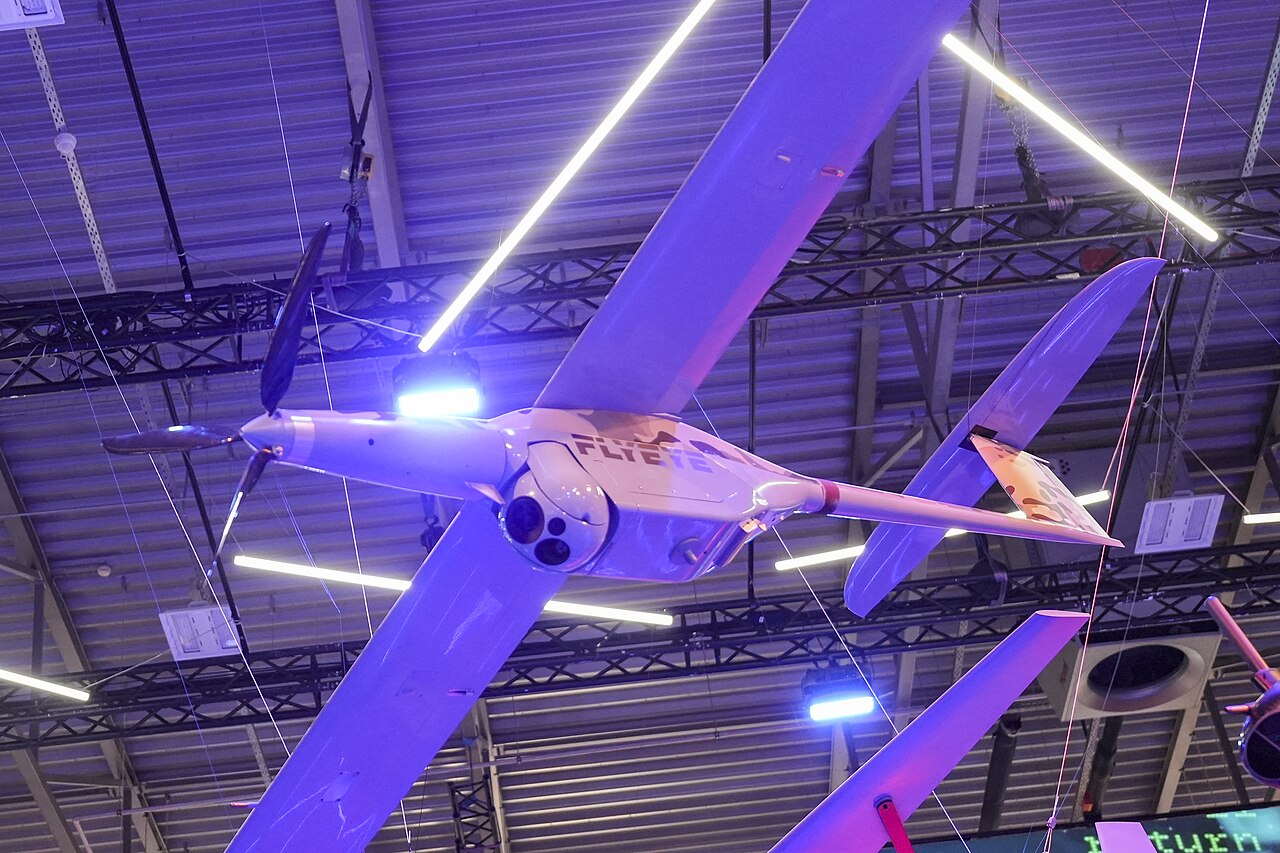
- Premiered 8 September 2026
- An alternative launch method
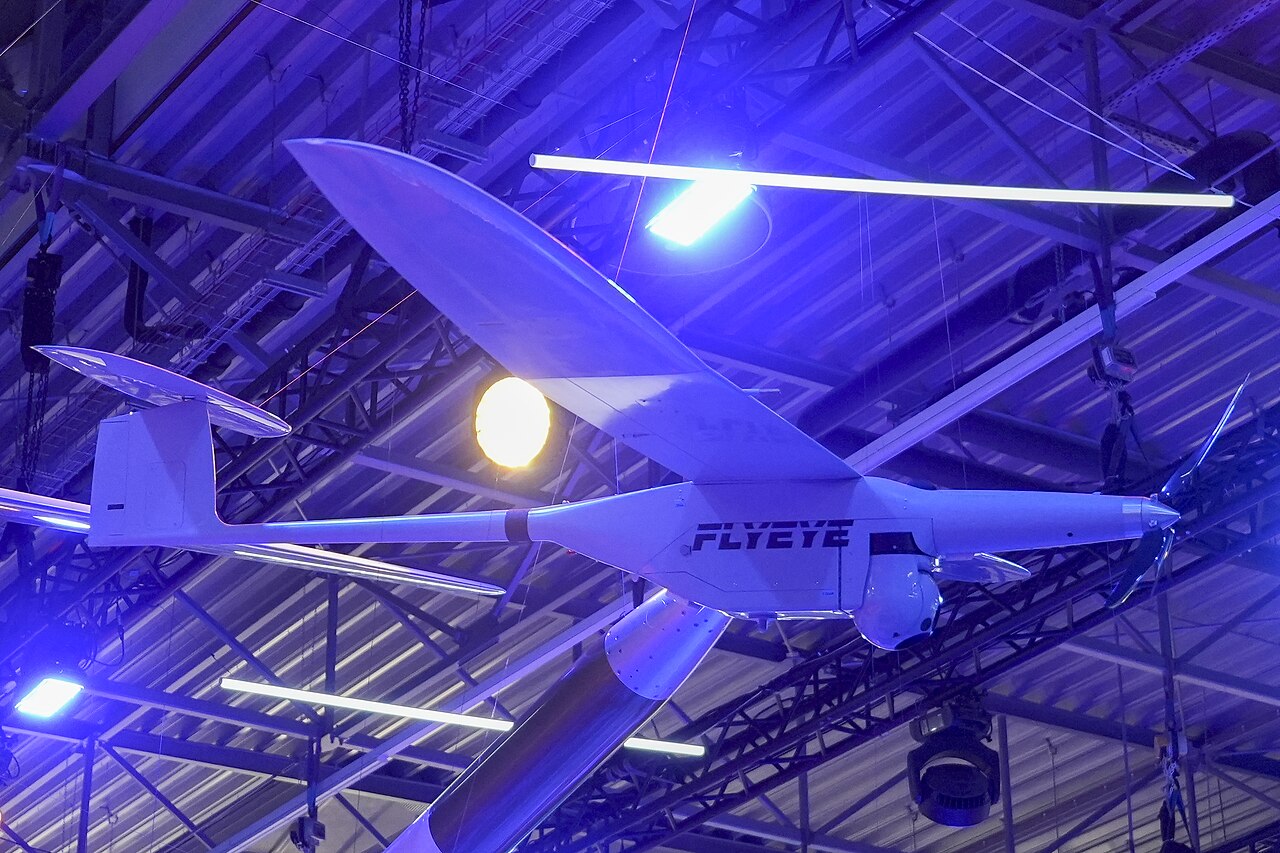
On 8 September, WB Group presented X-LIFTAIR as an additional FlyEye capability. The distinction matters to a buyer: this develops how an existing platform starts its flight, rather than announcing a new aircraft type. The photographs show FlyEye at MSPO 2026, without the X-LIFTAIR equipment.
WB attributes the benefit to reduced energy use during the initial flight phase. The claimed improvement must be read alongside configuration and test conditions, which the short exhibition announcement does not fully specify.
This article compares the launch announcement, current product documentation and a separate training announcement. These are manufacturer sources; MSSG has not independently measured the performance.
Three endurance figures
The current FlyEye sheet lists guaranteed endurance of 4.5+ hours, six hours with an alternative launch method and a maximum of 10+ hours. Those are not interchangeable promises. Without common reference conditions, the maximum cannot be presented as the routine result for every configuration.
Our interpretation is that an endurance figure needs a platform version, equipment fit and measurement conditions attached. Only then does a numerical change describe a useful product comparison. A larger number alone does not establish how much time is available for a particular observation service.
An aircraft is only part of the delivery
The manufacturer lists a 12 kg take-off mass and 3.6 m wingspan. The wider system also includes ground equipment, data analysis and training. Procurement comparisons therefore need an agreed system boundary, rather than the airframe’s mass alone.
Additional launch equipment may change transport, support and servicing requirements. We do not give its mass or price, which the cited material does not establish. Those remain relevant to total cost of ownership: the expenditure required after the initial purchase, as well as the acquisition itself.
Training develops alongside hardware
In July, WB announced accreditation of the Polish Air Force University’s FlyEye training centre. The review covered areas including its programme, infrastructure and instructor qualifications. It does not establish separate accreditation for the newly presented launch method.
This illustrates two parallel processes: a manufacturer develops configurations while a training organisation prepares people. The user’s benefit also depends on documentation and the ability to maintain competence. Neither can be inferred simply from a performance figure in a brochure.
The industrial significance
X-LIFTAIR illustrates how unmanned-system development can extend supporting equipment around an established platform. For industry, this raises questions about upgrading existing sets, compatibility and support availability. The presentation alone does not establish a quantity of ordered kits.
The most useful next information would define the offered configuration, training package and conditions behind the endurance claims. That would permit comparison without mixing baseline performance, alternative launch and a maximum result. Until then, these should remain separate entries in any assessment.
Sources & context
- WB Group: MSPO premiere day, 8 September 2026 ↗
- WB Group: current FlyEye product data ↗
- WB Group: military university training accreditation, 28 July 2026 ↗
Published by Mitchell Strategic Solutions Group. See our editorial standards and corrections policy. Read more →